

You land in Spain, and almost everything that happens in the first hour assumes your phone already works. Confirming you’ve found your airport pickup. Messaging your country director that you’ve landed. Pulling up the address of your new apartment. All of it runs through a phone, and if that phone isn’t connected yet, the first hour gets a lot harder than it needs to be.
Most guides to Spanish SIM cards are written for a different trip than the one you’re taking. They’re built around a week-long vacation, not several months of actually living and working somewhere. An intern needs a number that survives a lease conversation, a bank visit, and a landlord’s call back, not just enough data to post a few photos before flying home.
This guide covers how eSIM and physical SIM options actually differ, what ID you’ll need to register either one, what’s worth sorting out before you fly, and what to do the moment you land. It’s written for interns and study abroad participants heading to Spain, especially anyone who hasn’t done the international travel thing before.
Getting connected in Spain, whether through an eSIM or a Spain SIM card, isn’t complicated. However, it’s easy to leave it until the worst possible moment to figure it out, so that’s what we’re here to help you avoid. The first real decision is between two technologies, and it’s worth understanding both before you choose.
eSIM or Physical SIM: What's the Difference?
An eSIM is easier to set up before you fly. A physical SIM is usually better value if you’re staying more than a few weeks. Plenty of interns end up using both: one for the first few days, the other for the rest of the program.
If you haven’t used one before: an eSIM is a digital SIM profile you install directly on your phone rather than a physical card you insert. You buy a data plan, scan a QR code or follow an activation link, and your phone connects to a network without ever touching a piece of plastic.
The catch is that eSIM only works if your phone is both eSIM-compatible and unlocked. Compatibility has expanded a lot in recent years and keeps expanding, so rather than rely on a list of specific models here, check your phone’s settings for “Add eSIM” or a similar option, or check with your carrier directly closer to your departure date.
This isn’t a recommendation of one over the other; it’s an honest comparison. The right call depends on how long you’re staying and what phone you’re bringing.
When an eSIM Makes Sense
An eSIM is worth having if you want data working the moment you land, before you’ve found a store or figured out the transit system. It also lets you keep your home number active and reachable (useful for banking codes and two-factor authentication) while using the eSIM purely for data. For a short program, or just the first week before you sort out something longer-term, an eSIM covers the gap well.
The process is the same whether you’re headed to an internship in Madrid or Barcelona: the arrival airport is really what most people are asking about, not the city itself, since setup happens on your phone before you’ve gone anywhere in either place.
A straightforward starting point is the GoAbroad eSIM, available directly through the MyGoAbroad marketplace. The market is full of options, and evaluating one properly means comparing data allowance, activation window, and coverage area, not picking whichever one shows up first in a search.
When a Physical SIM Makes Sense
If you’re staying more than a few weeks, a Spanish number starts to matter in ways an eSIM often can’t cover. A landlord, a new coworker, a delivery driver, or a bank will likely call back on the number you gave them, and a foreign number complicates that. A physical prepaid SIM card in Spain is also the better value over a full program’s length, since local plans are generally priced for local, sustained use.
Older phones, or phones locked to a home carrier, are the other reason to go physical: not every phone supports eSIM, and a physical SIM sidesteps the question entirely.
What You Need to Get a SIM or eSIM in Spain
Spanish law requires identity registration for any prepaid SIM, so bring your passport. Registration happens right at the point of sale and takes a few minutes. The store or kiosk records your ID before the SIM activates (This requirement traces back to Spain’s data retention law, Ley 25/2007, which still governs prepaid SIM registration today).
A passport is the safest document to bring. Other forms of ID have become less reliably accepted at some carriers in recent years, so even travelers from EU countries are generally better off registering with a passport than a national ID card.
A prepaid SIM doesn’t require a Spanish residency number. A monthly contract typically does, along with a Spanish bank account and proof of address, requirements most interns won’t have in place on arrival. That’s why prepaid is the default choice for most people in their first weeks or months, regardless of which carrier they choose.
How to Get a SIM in Spain
There are three realistic ways to get a physical SIM: at the airport on arrival, at a carrier store once you’re in the city, or by arranging an eSIM online before you leave. Airport convenience generally comes at a premium compared to a city store, though exact pricing changes often enough that it’s not worth quoting here. Expect to pay more for the convenience, less for the errand.
Spain’s mobile market has consolidated in recent years: Movistar, MásOrange (now including Orange, Yoigo, and several other familiar names under one group), and Vodafone are the three major networks, alongside Digi as a smaller but growing operator. That’s useful context for understanding who owns what, not a reason to pick one over another.
Store staff may or may not speak English, especially outside the biggest cities. Either way, it’s a good early, low-stakes chance to use whatever Spanish you’ve got. The transaction is short, the vocabulary is predictable, and getting through it is a small, real win in your first days.
How to Get an eSIM for Spain
Setting up an eSIM is mostly a matter of installing it through your phone’s eSIM settings or a provider’s app before you leave home. Activation typically requires Wi-Fi, so this is a before-you-fly task rather than an at-the-airport one. Adelante’s sister site GoAbroad offers its own eSIM through the MyGoAbroad marketplace, which is worth a look if you’d rather buy directly from a source you already trust.
Evaluating options means looking at a few general factors: how much data the plan includes, how long the activation window lasts before the plan expires unused, and whether coverage is Spain-only or valid across the EU if you’re planning weekend trips elsewhere. None of that requires naming or ranking a specific provider. The categories matter more than any one brand.
Some travelers buy a short eSIM plan just to cover arrival week, then switch to a local prepaid SIM once they’re settled, which is exactly the “many interns use both” approach mentioned earlier, just from the eSIM side of it.
How to Prepare Before You Fly
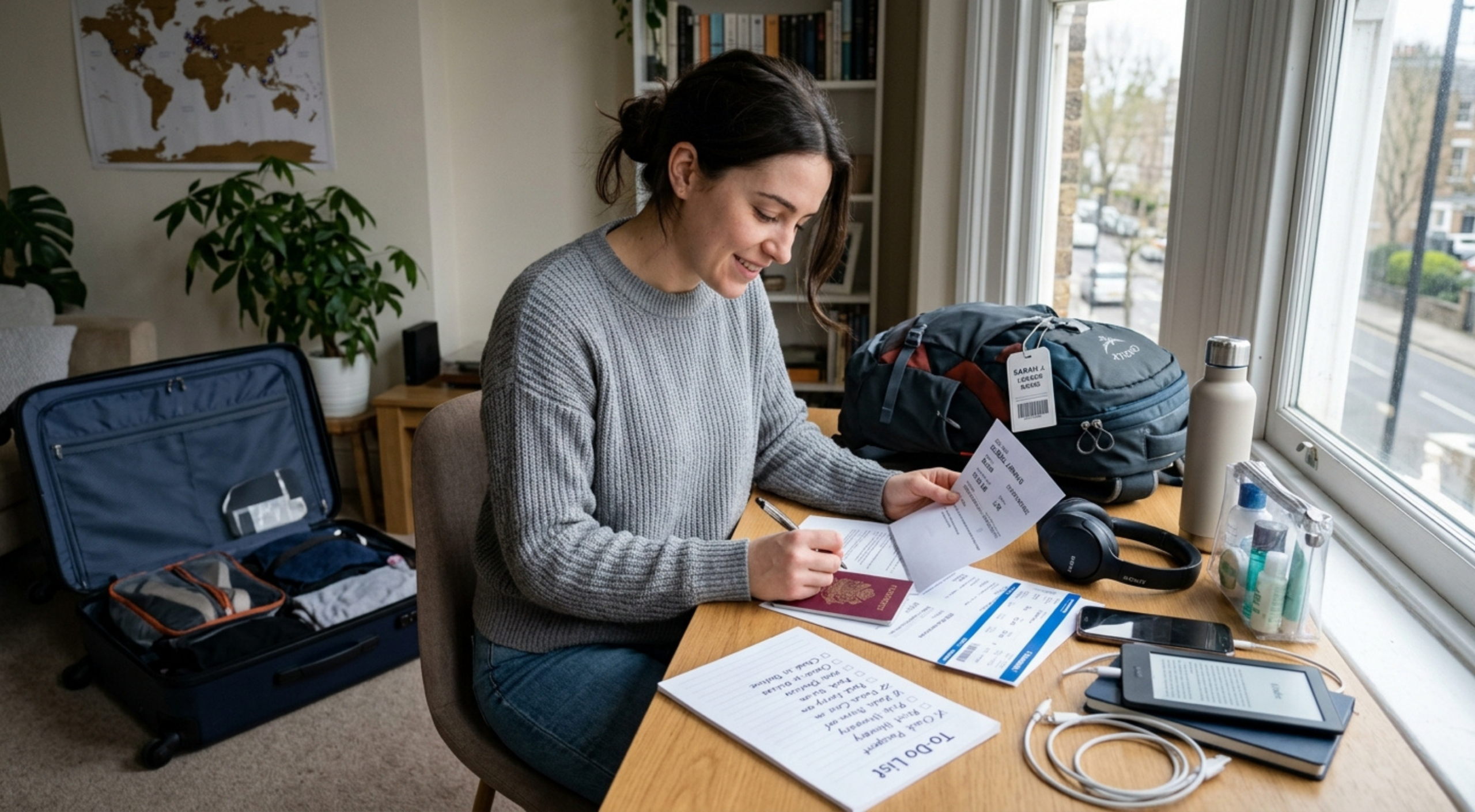
A few checks at home can prevent almost all common arrival-day problems with connectivity.
Check Your Phone Is Unlocked
Carrier locking means your phone is tied to your current provider and can’t accept another carrier’s SIM. Resolve this before you leave. Unlocking from abroad, after the fact, is a much harder problem to solve. You request unlocking from your current carrier, and it can take time to process, so this isn’t a same-week fix if you’ve put it off. If you’re weighing whether to bring your current phone at all, general travel essentials for going abroad touches on the same tradeoff.
Decide What Happens to Your Home Number
This is the single most common thing people overlook. If your home number handles two-factor authentication or bank verification codes, you likely want it to stay reachable, even from abroad. A dual SIM setup, keeping your home SIM active for those alerts while using an eSIM or new local SIM for everyday use, solves this cleanly. If you’re considering suspending or canceling your home plan instead, check what that actually triggers with your provider first; the consequences aren’t always obvious until after you’ve done it.
Download What You Need While You Still Have Data
Offline maps, a translation app, your airline’s app, your messaging apps of choice, and any documents you’ll need on arrival are all worth downloading before you leave, while you still have reliable data and Wi-Fi. Arrival day, jet-lagged and hauling luggage, is the worst possible time to discover something needs downloading.
For a full rundown of what to bring and prepare, see our blog on what to pack for an internship abroad.
Your First Day: Getting Connected on Arrival
Airport pickup is arranged once you’ve shared your flight itinerary, and you’ll have two contacts when you land: your country director for general support, and the driver or car service arranged specifically for pickup.
Both of those contacts are only useful if your phone actually works. That’s the strongest argument for sorting connectivity out before you land rather than scrambling for it after! Airport wifi can bridge the gap for messaging apps in a pinch, but it’s not something to plan around; coverage and reliability vary too much to count on.
Staying Connected Through Your Program
Once you’re set up, staying connected is mostly routine maintenance: topping up a prepaid plan or letting a monthly renewal process automatically, depending on how your plan works. Spain is part of the EU’s “Roam Like at Home” rule, which lets an EU-issued plan work across other EU countries at domestic rates (useful for weekend trips), though most plans cap how much roaming data is included before extra charges apply, so it’s worth checking your specific plan’s fair-use limit rather than assuming unlimited use elsewhere in the EU.
Housing usually includes Wi-Fi, so your mobile data needs at home may be lower than you’d expect. See housing abroad for more on what’s typically included. And while it’s a step removed from SIM cards specifically, travel insurance is strongly encouraged throughout your program, and a working phone helps keep you reachable if something goes wrong. See our health and safety page for more information.
At the end of it, this is a small logistical task that shapes your first 48 hours more than almost anything else on this list. There’s no single right answer. Plenty of interns use an eSIM to cover arrival, then switch to a local prepaid SIM once they’re settled in. Either path works, as long as you’ve thought about it before you land instead of after.
Adelante Abroad has been placing interns abroad since 1999, with programs in Madrid, Barcelona, and Seville that include airport pickup, housing, and in-country directors for support once you’ve arrived. Explore internship programs in Spain, or start an application if you’re ready to take the next step.